TTS Meaning in Text: What It Really Means in Chat, on TikTok, and on Snapchat
If you have seen TTS in a text message, a comment, or a video caption and wondered what it means, the short answer is simple: TTS most commonly stands for text-to-speech. It is the technology that turns written words into spoken audio, read aloud by a computer-generated voice.
That one definition covers almost every everyday use. What causes confusion is that TTS shows up in so many different places — TikTok videos, livestreams, Snapchat chats, Instagram Reels, and gaming — that people assume it must be a secret slang word with a different meaning on each app. In most cases, it is not. The app changes; the meaning stays the same. This guide explains the primary meaning, how TTS is used on each platform, what TTS messages are, and the lookalikes that trip people up: TSS and TT.
TTS Meaning: Text-to-Speech, the Primary Meaning
TTS stands for text-to-speech: software that converts written text into spoken words. You type or paste words in, and the system reads them out loud in a synthetic voice. Early systems sounded flat and robotic. Modern systems, built on neural speech models, can sound surprisingly natural, with varied pace, emphasis, and even different accents.
Cambridge Dictionary lists text-to-speech as a technology term, and that technical origin matters. Unlike true slang words that are born in chats and spread by teenagers, TTS started as a piece of technology and then moved into everyday conversation because the technology moved into everyone’s phone. That is why it behaves differently from most internet abbreviations: it describes a feature, not a feeling.
You will meet TTS in these everyday situations:
- Accessibility: a phone or computer reading messages, articles, or menus aloud for someone who cannot easily read the screen.
- Learning: listening to study notes, e-books, or articles while driving, exercising, or doing chores.
- Content creation: a creator typing a script and letting a generated voice narrate a video instead of recording their own voice.
- Navigation and assistants: spoken directions and answers from a voice assistant.
- Gaming and streaming: chat messages read aloud so a streamer does not have to stop playing to read the screen.
A useful rule of thumb: if the sentence also mentions a voice, a video, an app, narration, or reading something aloud, TTS almost certainly means text-to-speech. Words like “TTS voice,” “TTS reader,” “TTS app,” and “TTS generator” all point to the same technology.
How TTS Works, in Plain English
A text-to-speech system works in two broad stages. First, it analyzes the text: it expands numbers and abbreviations into speakable words (“2026” becomes “twenty twenty-six,” “Dr.” becomes “Doctor”), works out pronunciation, and plans the rhythm and stress of each sentence. Then it synthesizes the sound, generating an audio waveform that matches that plan.
The opposite technology is speech-to-text (STT), which turns spoken words into written text. The two are easy to mix up, so remember the direction: TTS speaks the text; STT writes the speech. Voice typing, where you dictate and your phone types the words, is speech-to-text, not TTS.
TTS in Streaming and Social Media
Streaming is where TTS became most visible, and it is the reason so many people now search for the tts meaning in text. On a livestream, a streamer cannot read every chat message and keep playing at the same time. With TTS switched on, donated or highlighted chat messages are read aloud by a generated voice, so the streamer and the audience hear them together. That is what people mean by “TTS” on Twitch, Discord, YouTube streams, and gaming chats — a feature that reads the chat out loud, often with a funny or dramatic voice that becomes part of the entertainment.
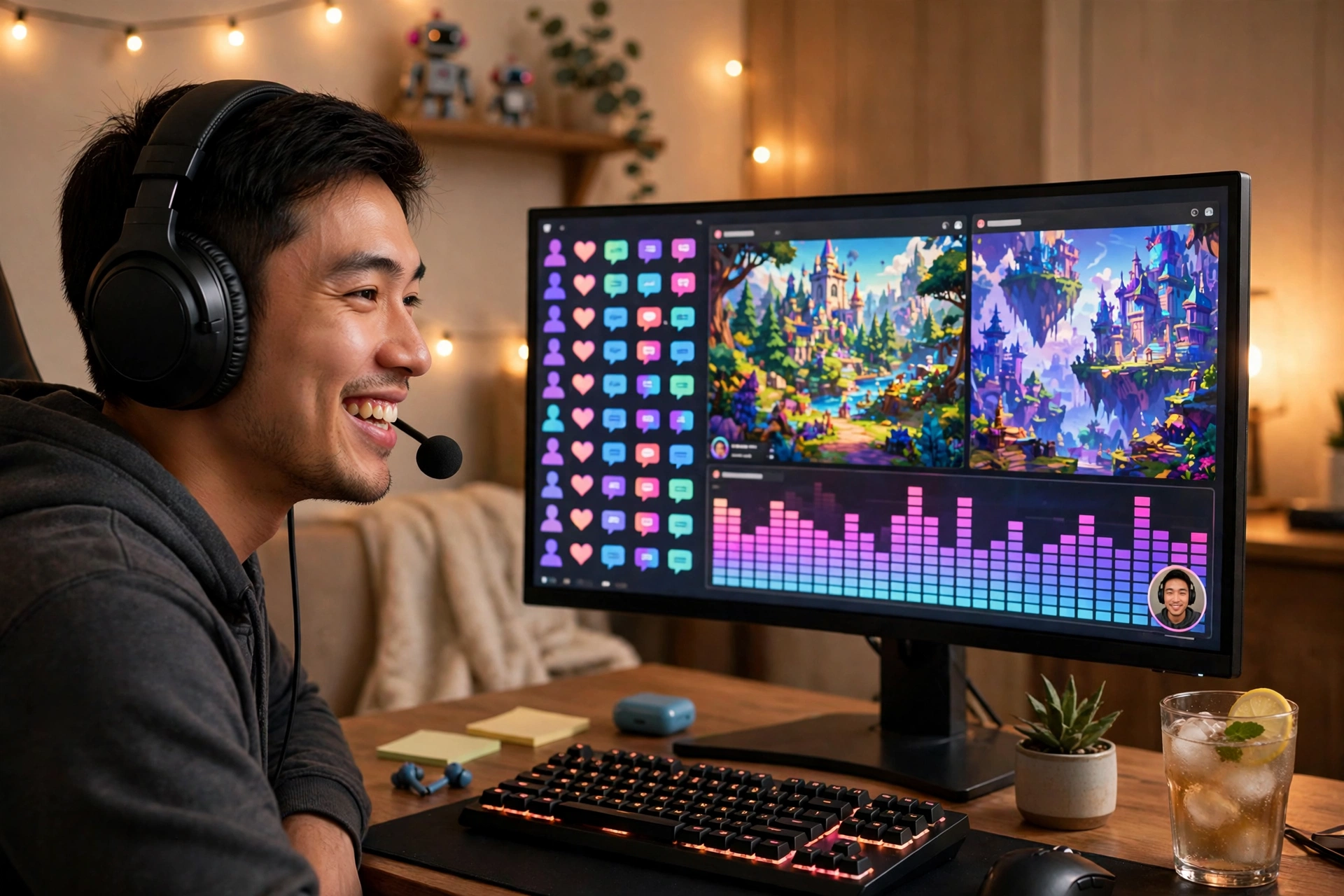
On short-form video apps, the pattern is similar but the purpose is narration. A creator writes the words they want spoken, picks a voice, and the app reads the on-screen text aloud over the video. That is the TTS voice viewers comment on in TikTok and Instagram videos — and the reason comments like “Which TTS voice is this?” or “I love this TTS” are really questions about the narration voice, not about a slang word.
TTS Meaning on TikTok, Snapchat, and Instagram
Searches for the tts meaning on TikTok, Snapchat, and Instagram are common, but there is no separate secret definition for each app. Here is how the same meaning plays out on each one:
TikTok
On TikTok, TTS means text-to-speech: the automated voice that narrates a video’s on-screen text. Creators use it when they do not want to record their own voice, when they want a consistent narration style across videos, or when the slightly robotic delivery is part of the joke. When someone asks about the “TTS” in a TikTok, they are almost always asking which narration voice was used or how the creator made it.
Snapchat
On Snapchat, there is no widely established separate slang meaning for TTS. When it appears in a Snap or a Snapchat chat, it still refers to text-to-speech — for example, a phone accessibility feature reading a message aloud, or a voice feature in a video. If a Snap uses TTS with no mention of voices, videos, or reading aloud, the safest move is to ask what the sender meant rather than guess, because no standard Snapchat-only definition exists.
On Instagram, TTS again means text-to-speech, most often in Reels: a generated voice narrating the video instead of the creator’s own voice. You may also see it when creators discuss accessibility, captions, or voiceover tools for their videos.
WhatsApp and Everyday Messaging
In WhatsApp and other messaging apps, TTS usually comes up when someone talks about having messages read aloud — for instance, while driving or when they cannot look at their phone. It is a feature discussion, not a greeting or a reaction word.
TTS Meaning in Text From a Girl — or From Anyone
One of the most searched variations is the tts meaning in text from a girl. The honest answer is that there is no separate meaning based on who sends it. TTS does not change meaning by gender, and no established “girl version” of the abbreviation exists. If a girl texts you about TTS, she means the same thing anyone else would: text-to-speech, a voice feature, or a video narration voice.
That is worth saying plainly, because some low-quality guides invent sender-specific or platform-specific definitions to fill out a page. If the message gives no context at all — just the three letters on their own — the sender’s identity will not decode it. The surrounding conversation will. Ask, “Do you mean text-to-speech?” and you will get a straight answer.
What Are TTS Messages?
TTS messages are written messages that are read aloud by a text-to-speech system instead of being read silently on screen. The term can refer to two slightly different things, and context tells you which one is meant:
- A message delivered as audio: you receive a text, and your device or app reads it out loud — common with accessibility settings, car systems, and smart speakers.
- A message read aloud on a stream or in a video: a viewer sends a chat message, and the stream’s TTS feature speaks it for everyone to hear, sometimes attached to a donation or a highlighted comment.
In both cases, the message itself is ordinary text. TTS is the delivery method, not a type of message with its own code. A “TTS message” is simply a text that you hear instead of read.

TTS in Chat: Examples and How to Reply
Here is how TTS typically appears in real conversations:
- “Can you use TTS for this video?” — Can you add a generated voiceover?
- “Which TTS voice did you use?” — Which synthetic narration voice is that?
- “I use TTS when I’m driving.” — My phone reads messages aloud for me.
- “The TTS voice makes everything sound serious.” — A comment on how the generated voice sounds.
- “Turn on TTS so I can hear the chat.” — Switch on the read-aloud feature during a stream or game.
There is no special reply you are expected to give when someone mentions TTS, because it is not a greeting, a joke, or an emotional reaction. Just respond to the actual question: recommend a voice, agree that a voice sounds funny, or switch the feature on. If you are unsure what someone means, a short clarification — “Do you mean text-to-speech?” — is completely natural and avoids a wrong guess.
One habit that helps across all of English, not just abbreviations: check the words around an unfamiliar term before looking it up in isolation. Confused pairs are everywhere — much like the difference between Swap vs Swop or choosing between In the Street vs On the Street, the surrounding sentence usually settles the meaning. The same applies when you are deciding whether a phrase is correct at all, as in “It Worth It” or “It Is Worth It”?
Confusions to Avoid: TSS, TT, and Other Lookalikes
Most TTS confusion does not come from TTS itself. It comes from three nearby letter combinations.
TSS vs. TTS
TSS is most often a typo for TTS — one letter off, on keyboards where S and T are not far apart in typing flow and in fast chats. It has no widely established slang meaning of its own, so if you see “TSS” in a chat about voices or videos, read it as a mistyped TTS and, if it matters, check with the sender.
Outside casual chat, TSS does have a serious, unrelated medical meaning — toxic shock syndrome — which is why context matters so much. A medical article mentioning TSS is not talking about text-to-speech at all. The same caution applies in the other direction: never assume a medical or technical abbreviation means text-to-speech just because the letters look familiar.
TT in Gen Z Slang
TT is a different abbreviation from TTS, and the two should not be mixed up. In Gen Z and gaming chats, TT most commonly works as a crying-face emoticon: two squeezed-shut eyes with tears streaming, written as TT or as part of T_T. It expresses being overwhelmed, laughing until crying, or mock sadness — the tone depends on the message around it. In some captions, TT is also used as shorthand for TikTok itself. Neither use has anything to do with text-to-speech, and TT is never just a shortened form of TTS.
Other Meanings in Specialized Fields
Like many three-letter abbreviations, TTS can stand for other things in specialist contexts — for example, “true to size” in clothing and shoe sizing, where a product described as TTS fits as expected rather than running small or large. That meaning belongs to shopping and fashion discussions, not to texting. If the conversation is about fit and sizes, “true to size” is the right reading; if it is about voices, videos, or messages, text-to-speech is.
When in doubt, apply the context test: what is the conversation about? Voices, videos, apps, and accessibility point to text-to-speech. Sizing points to “true to size.” Medicine points elsewhere entirely. The letters alone never decide.
Is TTS Rude or Offensive?
No. TTS is a neutral technology term. It is not an insult, a swear word, or a coded rude message, and it is safe to use in casual, school, and work conversations when the topic is voices or audio features. The only caution is a practical one: do not drop it into a formal email or document without context, because a reader outside tech or creator circles may not recognize the abbreviation. Writing it out as “text-to-speech” on first use is the polite, clear choice.
Quick Reference Table
| Where you see TTS | What it usually means |
|---|---|
| TikTok video or comment | Text-to-speech narration voice |
| Snapchat chat | Text-to-speech (no separate Snapchat-only slang meaning) |
| Instagram Reel | Text-to-speech voiceover |
| Livestream or gaming chat | Chat messages read aloud by a generated voice |
| Phone settings or accessibility | Feature that reads text aloud |
| Clothing or shoe listing | True to size (specialist meaning, not texting) |
| Medical or technical document | A field-specific term — check the document’s own definitions |
Frequently Asked Questions
What does “TTS” mean in slang?
In slang-adjacent use, TTS still means text-to-speech. It is not really a slang word in the way LOL or BRB are: it does not express an emotion or a reaction. People use it casually in chats and comments because the technology is part of everyday online life, but the meaning stays technical — a computer-generated voice reading written words aloud. Claims that TTS secretly stands for phrases like “talk to someone” in general slang are not supported by widespread usage; when someone means “talk to someone,” they normally write it out or use a different abbreviation.
What is TTS social media?
On social media, TTS is text-to-speech: the generated voice that narrates videos, reads captions aloud, or voices chat messages on a stream. Creators mention it when they discuss which narration voice they used, how they made a video without recording their own voice, or which accessibility and voiceover features an app offers. It is a production and accessibility feature, not a social media trend with its own hidden definition.
What does TTS mean on Snap?
On Snapchat, TTS means text-to-speech, just as it does elsewhere. There is no established Snapchat-only slang definition. In practice, it comes up when someone talks about a voice feature, having a message read aloud, or narration in a video shared through the app. If a Snap mentions TTS without any voice or video context, ask the sender what they meant rather than assuming a platform-specific meaning that does not exist.
What does TTS stand for?
TTS stands for text-to-speech (also written “text to speech”). It is the technology that converts written text into spoken audio using speech synthesis. In clothing and footwear, the same letters can stand for “true to size,” but in texting, social media, streaming, and computing, text-to-speech is the standard expansion.
What does “TTS” mean in a chat?
In a chat, TTS most commonly means text-to-speech. Someone might be asking for a message to be read aloud, discussing a phone’s read-aloud feature, or talking about a generated voice in a video or stream. For example, “Can you use TTS for this?” means “Can you convert this text into spoken audio?” It is not a greeting, farewell, or emotional reaction, so reply to the underlying question rather than treating it as slang that needs a coded response.
What does TTS mean in TikTok?
On TikTok, TTS means text-to-speech: the automated voice that reads a video’s on-screen text aloud as narration. Creators choose a voice, type their script, and the app speaks it over the video. Comments asking about the “TTS” in a TikTok are usually asking which narration voice was used or how the creator created it.
What does tss mean in slang?
TSS has no widely established slang meaning of its own. In casual chats about voices or videos, it is most often a typo for TTS. Outside slang, TSS is best known as a medical abbreviation for toxic shock syndrome, which is unrelated to texting. Because no standard slang definition exists, do not guess: if the context is about voices or videos, treat it as a mistyped TTS; if the context is medical, it is the medical term; and if neither fits, ask the sender.
What are TTS messages?
TTS messages are written messages that are delivered as spoken audio by a text-to-speech system. That can mean a phone reading an incoming text aloud through an accessibility feature, a car system speaking a notification, or a livestream’s TTS feature reading viewers’ chat messages aloud for everyone to hear. The message itself is ordinary text — TTS is simply the way it is delivered, heard instead of read.
What does “TT” mean in Gen Z slang?
In Gen Z slang, TT most commonly represents a crying face: two squeezed-shut eyes with tears streaming, as in TT or T_T. It can signal laughing until crying, feeling overwhelmed, or playful mock sadness, depending on the message around it. TT is also sometimes used as shorthand for TikTok in captions. It is a separate term from TTS and never means text-to-speech, so do not shorten TTS to TT or expand TT as text-to-speech.
Related Guides
If you enjoy decoding everyday English, you may also like these guides: Other Ways to Say “Proud of You”, Other Ways to Say “As You Can See”, Other Ways to Say “Happy Friday” With Style, and Other Ways to Say “Sounds Good” Professionally. Small wording choices change tone more than most people expect — and, as with TTS, context is what makes the meaning clear.
Conclusion
The TTS meaning in text is refreshingly simple once the noise is stripped away: TTS means text-to-speech, the technology that turns written words into spoken audio. It narrates TikTok videos, reads livestream chats aloud, powers phone accessibility features, and helps people listen to written content instead of reading it. It is not a secret slang word, it has no separate meaning based on who sends it, and its lookalikes — TSS, usually a typo, and TT, usually a crying face — are different terms entirely.
So the next time you see TTS in a chat, a comment, or a caption, ask one question: is this about a voice? If it is, you already know the answer. And if it is not, a quick “Do you mean text-to-speech?” will clear it up faster than any guess.