DPWM Meaning in Text
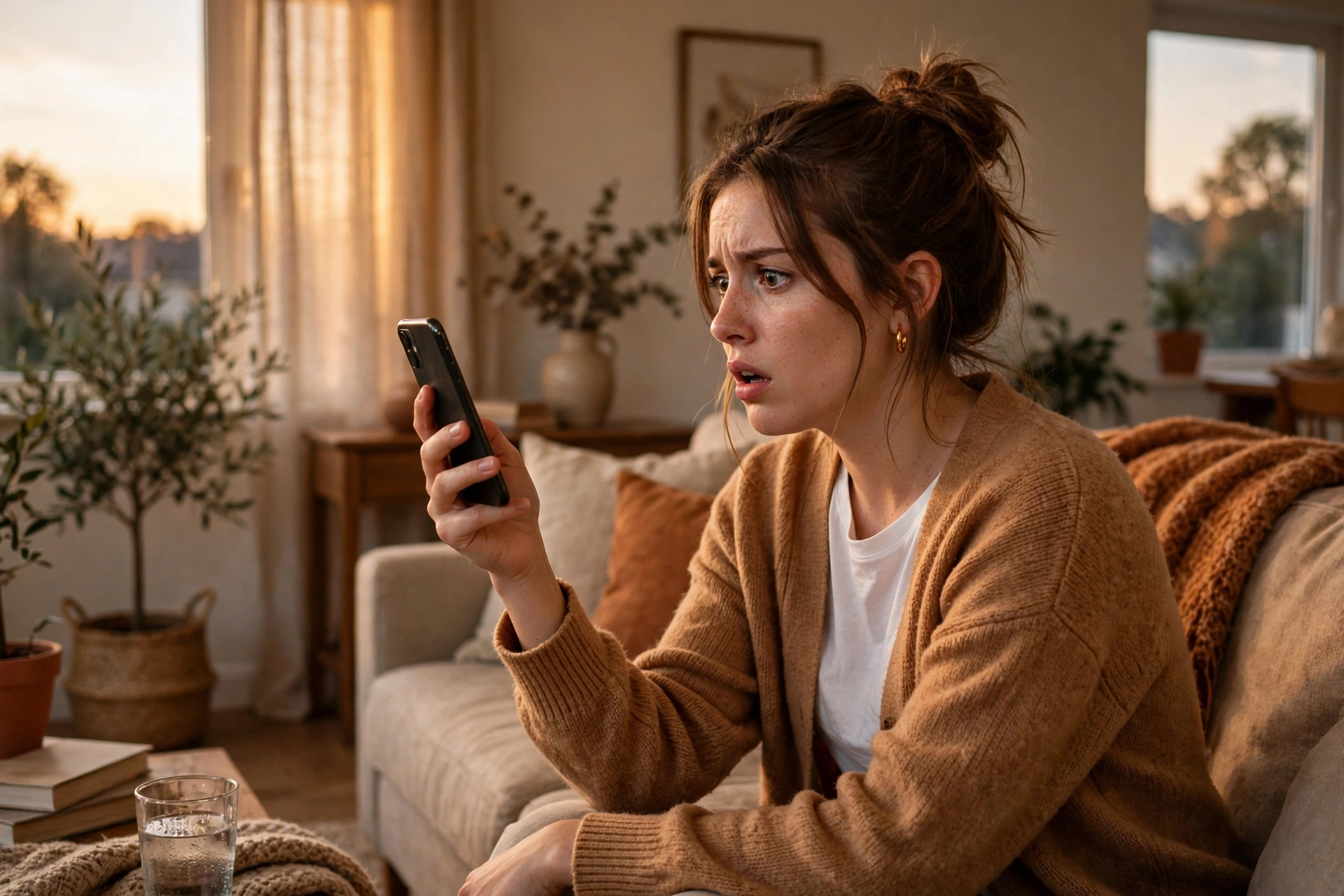
If someone just sent you “DPWM” and you are staring at your phone wondering whether you are in trouble, here is the short answer: DPWM means “Don’t Play With Me” in texting and on social media. It is a firm, emotional little abbreviation people use when they want to be taken seriously, when they cannot believe what they just heard, or when they are drawing a line and do not want to be joked with.
This guide explains exactly what DPWM means in text, how its tone changes with emojis and punctuation, what it means on Snapchat, Instagram, TikTok, and WhatsApp, how it differs from lookalikes like DFWM, and what to say back. You will also get 16 real chat examples and answers to the 10 most-asked questions about DPWM.
What Does DPWM Mean in Text?
DPWM stands for “Don’t Play With Me.” It is internet slang, not a dictionary word. Cambridge Dictionary defines slang as very informal language used especially by particular groups of people, and DPWM fits that description exactly: it belongs in casual chats, not in formal writing.
When someone writes DPWM, they are usually saying one of these things:
- “Be serious right now.”
- “Stop joking around.”
- “I can’t believe this.”
- “Don’t test my patience.”
- “Tell me you’re not kidding.”
The phrase “don’t play with me” itself is much older than the abbreviation. It has been part of spoken English for decades, especially in African American Vernacular English and in music, where it works as a demand for sincerity: do not waste my time, do not mislead me, do not treat me lightly. Texting simply squeezed those four words into four letters.
DPWM at a Glance
| Full form | Don’t Play With Me |
| Category | Texting slang / internet abbreviation |
| Tone | Serious, playful, surprised, or frustrated — context decides |
| Used in | Text messages, WhatsApp, Instagram, TikTok, Snapchat, Discord, group chats |
| Pronunciation | Letter by letter: D-P-W-M, or read as the full phrase |
| Best for | Friends, close contacts, casual social media |
| Not for | Work emails, job applications, messages to teachers or clients, formal writing |
How to Read the Tone: The Same Four Letters, Five Different Messages
DPWM is one of those abbreviations where the punctuation and the emoji do most of the work. Before you react, read the whole message:
- “DPWM 😂” — playful. Your friend is laughing and dramatizing disbelief.
- “DPWM 😭” — overwhelmed or emotional. Something shocking, exciting, or unbelievable just happened.
- “DPWM.” — serious. The period hardens it into a real boundary.
- “DPWM 😤” — frustrated. Patience is running out.
- “DPWM??” — demanding proof. “Are you serious? Say it again, because I don’t believe you.”
A good rule: if the conversation was friendly until now, assume the playful reading first. If it follows an argument or a repeated joke, take it as a genuine request to stop.
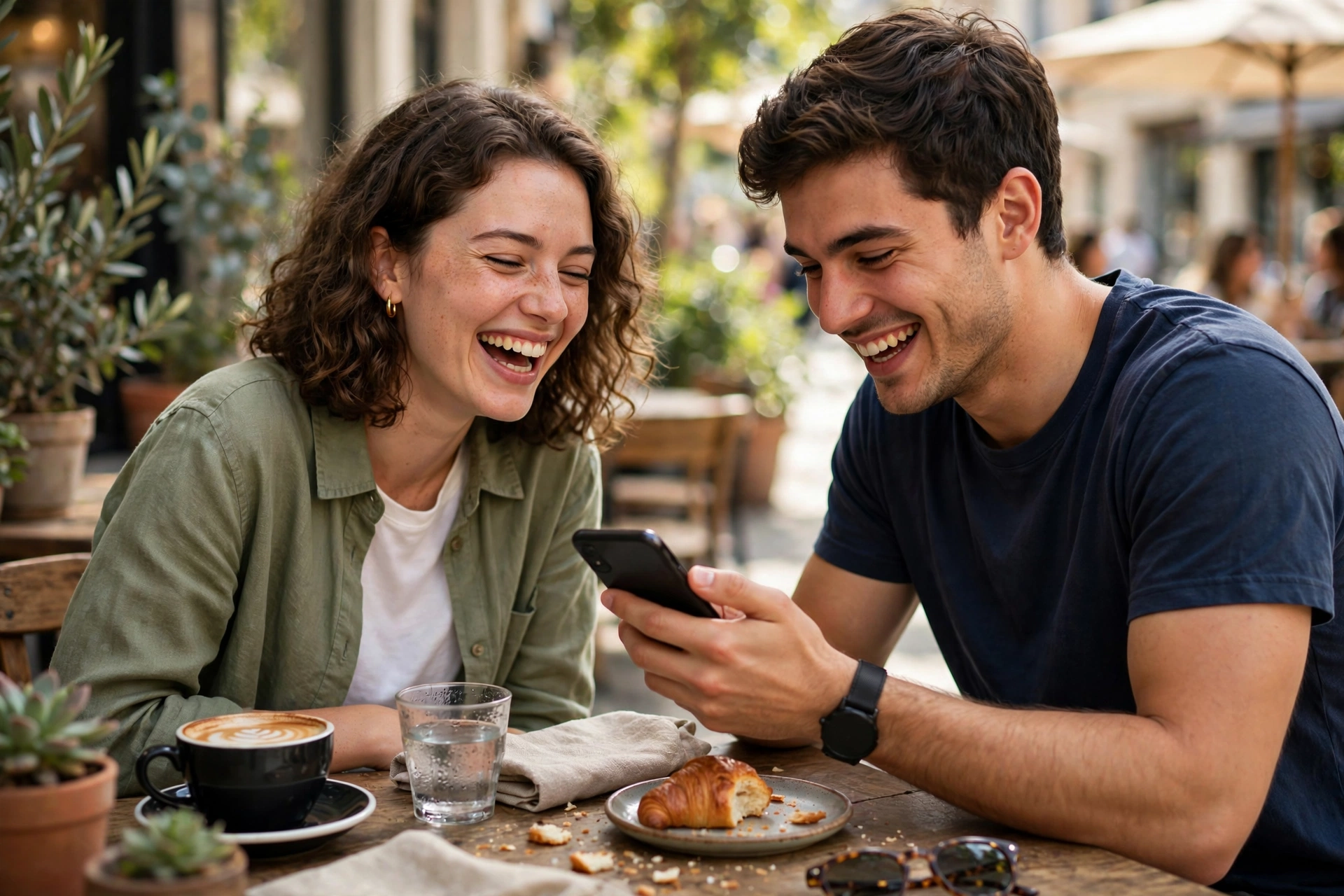
16 Real Chat Examples of DPWM
Here are 16 distinct, realistic dialogues showing how DPWM actually sounds in everyday chats, with what each one really means.
1. Disbelief over good news
Maya: I just got the job! I start Monday.
Jordan: DPWM 😭 Are you serious right now?
Meaning: “I can’t believe this — tell me it’s true.”
2. A friend calls out a joke
Chris: Bro, I ate the last slice of your pizza.
Sam: DPWM 😂 You did not just do that.
Meaning: playful scolding between friends, softened by the laughing emoji.
3. Setting a boundary mid-argument
Alex: I already told you three times, I’m not going.
Taylor: Come on, one more time won’t hurt.
Alex: DPWM. I’m done discussing this.
Meaning: a firm, serious “stop pushing me.”
4. Shock at a plot twist
Priya: You will never guess who just moved in next door.
Dev: DPWM?? Who?
Meaning: “This has to be good — spill it.”
5. A sibling tease
Sara: Mom said I can have your room when you move out.
Ben: DPWM 😂 Mom said no such thing.
Meaning: joking disbelief, not a real complaint.
6. Frustration with repeated lateness
Jess: Sorry, running 20 minutes late again.
Kai: DPWM. We talked about this yesterday.
Meaning: genuine annoyance — the joke has worn thin.
7. Reacting to a glow-up photo
Nina: *sends a photo from her graduation*
Leo: DPWM 😍 You look incredible!
Meaning: admiring disbelief — “You cannot be serious, you look that good?”
8. A group chat pile-on
Group chat: Everyone is roasting Ryan about his haircut.
Ryan: DPWM, all of you 😤
Meaning: “Okay, the joke is over” — half laughing, half fed up.
9. Disbelief at a bargain
Omar: Got these sneakers for half price.
Lena: DPWM, where? Send me the link right now.
Meaning: excited surprise, plus a demand for details.
10. A dating-app reality check
Zoe: You said you don’t even like hiking, and now you’re climbing mountains?
Ethan: Haha, I got into it this year.
Zoe: DPWM, you are a completely different person 😂
Meaning: teasing surprise at an unexpected change.
11. A serious relationship conversation
Ava: I need you to actually listen to me for once.
Noah: I am listening.
Ava: DPWM, Noah. This matters to me.
Meaning: “I am not joking, and I need you to take this seriously.”
12. A sports upset
Diego: Did you see the final score? We lost in the last minute.
Marco: DPWM 😩 I turned it off at halftime!
Meaning: gut-punched disbelief at an unlucky result.
13. A work friend venting
Emma: My boss just moved the deadline to tonight. Tonight!
Sophia: DPWM, that’s actually unfair.
Meaning: sympathetic outrage on a friend’s behalf.
14. A prank reveal
Liam: Relax, the spider was fake. Got you!
Mia: DPWM 😭 I nearly threw my phone across the room.
Meaning: relieved, dramatic exaggeration after a scare.
15. A birthday surprise spoiled
Ella: Surprise! We booked the cabin for your birthday weekend.
Jack: DPWM!! You guys are the best, I had no idea.
Meaning: joyful shock — the opposite of anger, same abbreviation.
16. A calm, final warning
Ruby: I told you I don’t like being teased about this.
Finn: It was just a joke, chill.
Ruby: DPWM. I mean it this time.
Meaning: a clear boundary, stated plainly so there is no misunderstanding.
Notice the pattern across all 16: DPWM never carries its meaning alone. The emoji, the punctuation, the relationship, and the sentence before it decide whether it lands as a joke, a gasp, or a warning.
DPWM Meaning on Snapchat, Instagram, TikTok, and WhatsApp
The core meaning does not change from app to app, but the flavor does.
DPWM on Snapchat
On Snapchat, DPWM usually appears in fast, private chats between friends — often as a reaction to a snap or a story. A “DPWM 😂” reply to a snap usually means “I saw that, and I can’t believe it,” while a bare “DPWM” after a disagreement reads as a real request to stop. Because snaps disappear, tone clues matter even more here than in a saved chat thread.
DPWM on Instagram
On Instagram, DPWM shows up in DMs, comments, and captions. In a caption — “New look. DPWM 💅…” — it works as attitude and self-confidence: a warning not to underestimate the poster. In a comment under a friend’s photo, it is usually admiring disbelief, the same energy as “no way!”
DPWM on TikTok
On TikTok, DPWM lives in comment sections and captions on reaction videos, storytimes, and glow-ups. A commenter writing “DPWM, this story is wild” is expressing shock at the video, not talking to the creator personally. It is one of the platform’s shorthand gasps, alongside “no way” and “I’m screaming.”
DPWM on WhatsApp
On WhatsApp, DPWM is more likely to be serious, because WhatsApp chats are usually with real-life friends and family rather than strangers. A DPWM in a family group chat after a repeated joke can genuinely mean “enough,” so read it more literally here than you would in a TikTok comment.
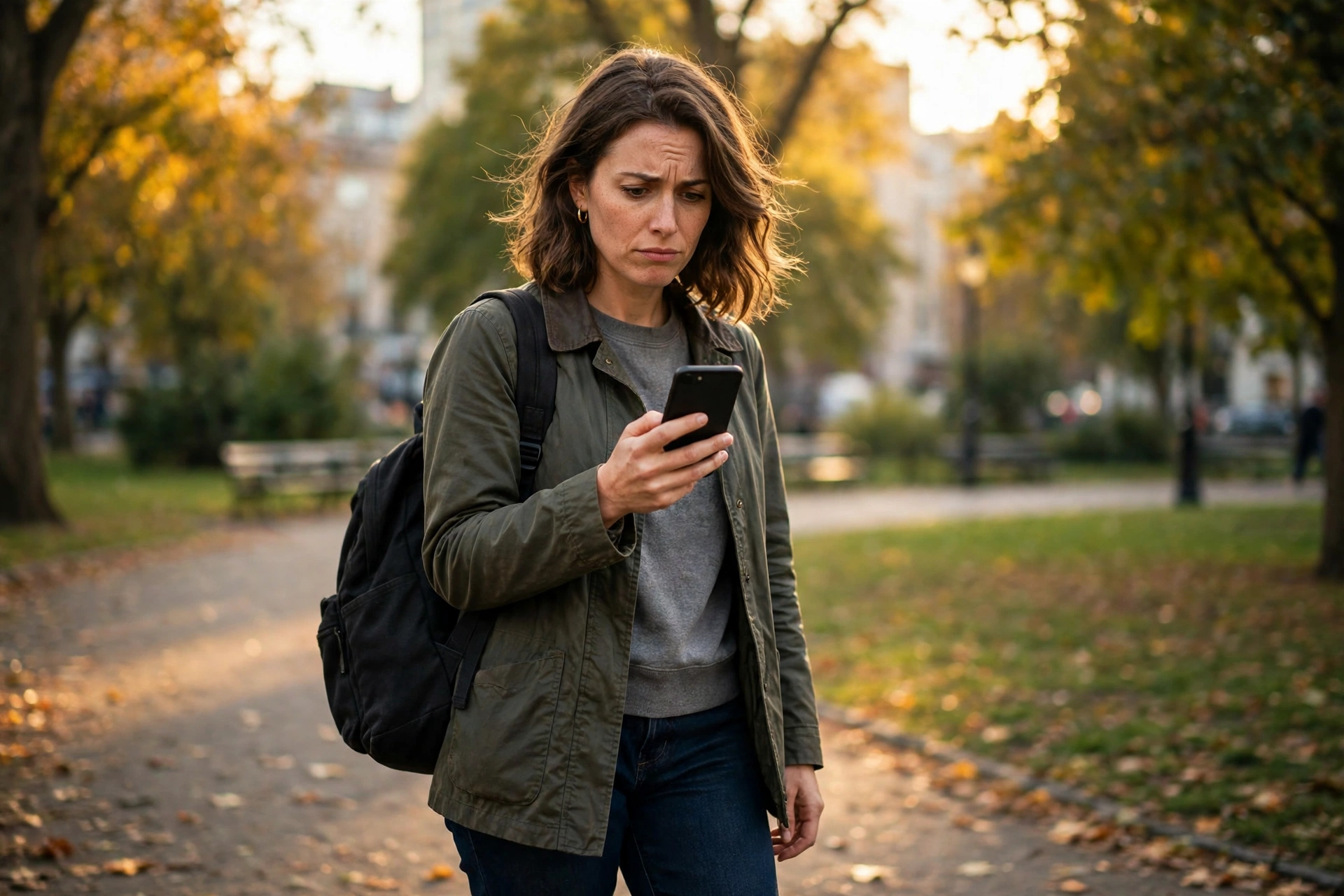
DPWM vs Similar Slang: FR, ISTG, SMH, NGL, and STTM
DPWM sits in a family of reaction abbreviations, but each one does a different job:
- DPWM — “Don’t Play With Me”: a demand to be taken seriously, or disbelief. It pushes back at the other person.
- FR — “For Real”: confirms truth or agreement. It backs something up rather than challenging it.
- ISTG — “I Swear To God”: emphasizes that the speaker is telling the truth or is exasperated. Stronger and more emotional than DPWM.
- SMH — “Shaking My Head”: disappointment or disbelief at someone else’s behavior, without the direct challenge of DPWM.
- NGL — “Not Gonna Lie”: introduces an honest opinion. It softens a statement; DPWM sharpens one.
- STTM — “Stop Talking To Me”: a request to end the conversation. DPWM asks someone to change how they are talking, not to stop talking entirely.
For the full breakdown, see our guide to STTM meaning in text.
For more abbreviations in the same family, see our guides to AFK meaning in text, FOMO meaning in text, DND meaning in text, HYD meaning in text, TTS meaning in text, and WYO meaning in text.
Is DPWM Still Popular? Trends and Where It Is Headed
The competitor’s trends section says only that DPWM is “still common” among younger users. The real trajectory is more specific — and more interesting — because DPWM has followed a different path from the acronyms that went fully mainstream.
Stage 1: the spoken phrase. “Don’t play with me” circulated in spoken English, especially in Black American English and in R&B and hip-hop lyrics, long before anyone shortened it. It was a boundary phrase first and an abbreviation second.
Stage 2: SMS and chat shortening. As texting and early social media rewarded short, punchy messages, the phrase was compressed into DPWM, the same way “don’t mess with me” style warnings became quick reaction shots. It stayed an in-group term: widely understood by people deep in chat culture, unfamiliar to everyone else.
Stage 3: the meme and reaction era. On Twitter, Vine, and later TikTok, DPWM found its natural home as a comment-section reaction — a one-line gasp under a surprising story, a transformation video, or a plot twist. This is where its playful use grew: the same letters that once warned someone off became a way to perform shock for an audience.
Stage 4: where it stands now. Unlike LOL, OMG, or FOMO, DPWM has not crossed into dictionary recognition or everyday speech outside the internet. It remains a niche, youth-driven reaction term: instantly readable on TikTok and Instagram, but likely to confuse an older relative or a work contact. Its stronger cousin DFWM (with a stronger verb in place of “play”) exists for angrier moments, which has kept DPWM itself in the middle ground — firm, but not the harshest option available.
The likely direction is sideways, not upward: DPWM will keep circulating in comment sections and friend chats without becoming a mainstream word, because its power depends on being slightly edgy and in-group. The moment everyone uses it, it stops doing the job it was built for.
Common Mistakes With DPWM
- Assuming it is always angry. Often it is playful, surprised, or admiring. Check the emoji before you apologize or argue back.
- Using it at work or with strangers. DPWM can sound confrontational to someone who does not know your sense of humor. In professional messages, write the full sentence instead.
- Confusing DPWM with DFWM. DFWM swaps in a much stronger verb and reads as genuinely aggressive. Do not use the two interchangeably.
- Treating it as a secret code. DPWM has no hidden second meaning in chats. If a message is unclear, the surrounding conversation — not a secret definition — will explain it.
- Replying to a serious DPWM with a joke. If someone has just drawn a boundary, laughing it off is the fastest way to escalate the situation.
How to Reply When Someone Says DPWM
Match your reply to the tone you received:
- If they are joking: “Okay okay, I’ll behave 😂” or “I swear, it’s true!”
- If they are shocked: “I know, right? I couldn’t believe it either.” Then give them the detail they are asking for.
- If they are serious: “Got it, I’ll stop. Sorry about that.” Short, sincere, and no follow-up lecture.
- If you are not sure: “Are you serious, or joking?” One question clears up the ambiguity without escalating anything.
- If you crossed a line: “You’re right, that wasn’t fair. I won’t do it again.” Then actually stop.
What not to do: do not reply with DPWM back in anger, do not demand an explanation immediately, and do not keep joking about the same thing to “test” whether they meant it. Space and sincerity are what the sender actually wants.
Frequently Asked Questions About DPWM
What does DPWM stand for?
DPWM stands for “Don’t Play With Me.” It is an initialism: each letter stands for one word of the phrase, and it is used as a standalone reaction in chats and social media comments.
What does DPWM mean in text?
In text, DPWM means “Don’t Play With Me.” People send it to express disbelief, demand seriousness, show frustration, or set a boundary — for example, “DPWM, are you actually serious?” The exact shade of meaning comes from the emojis, punctuation, and conversation around it.
What does DPWM mean on Snapchat?
On Snapchat, DPWM usually means “Don’t Play With Me” in a casual, emotional chat between friends. It often appears as a reaction to a snap or story — surprise, shock, or playful teasing — and only reads as a serious boundary when the conversation has turned tense.
What does DPWM mean on Instagram?
On Instagram, DPWM appears in DMs, comments, and captions. In comments it usually expresses admiring disbelief (“DPWM 😍”), while in captions it often carries attitude and confidence, as in “New look. DPWM 💅…” — a warning not to underestimate the poster.
What does DPWM mean on TikTok?
On TikTok, DPWM is a comment-section reaction expressing disbelief or excitement about a video — a shocking storytime, a transformation, or an unexpected twist. Commenters are reacting to the content, not usually confronting the creator personally.
Is DPWM rude?
Not automatically. DPWM can be playful, friendly, or serious depending on tone, emojis, and the relationship between the people involved. It only feels rude when it is sent coldly, with no softening cues, or when it is used to shut someone down in a conversation that needed kindness instead.
What does DPWM mean from a girl?
When a girl uses DPWM, it means the same thing: “Don’t Play With Me.” She may be expressing surprise, excitement, frustration, or asking whether you are serious. There is no separate gender-specific meaning — read the tone and the conversation, not the sender’s gender.
What does DPWM mean from a guy?
When a guy says DPWM, he is generally expressing disbelief, seriousness, or frustration, exactly as anyone else would. The meaning does not change based on gender; it is determined by context, emojis, and the history of the conversation.
What is the difference between DPWM and DFWM?
DPWM is the softer, more playful version: “Don’t Play With Me.” DFWM replaces “play” with a much stronger verb, making it angrier, more aggressive, and more likely to offend. Use DPWM for teasing and firm boundaries; avoid DFWM unless you genuinely intend the harsher tone, and never use either at work.
Does DPWM have any other meanings?
In texting, essentially no: “Don’t Play With Me” is the established meaning. Outside chat, the same letters have unrelated technical expansions, such as Digital Pulse Width Modulation in electronics. A few low-authority pages also suggest fringe readings — one claims an Instagram-only “Don’t Post, Watch Me,” another reads it as “Don’t Piss Me Off” — but neither is the widely recognized meaning, and you should not assume either one in a real conversation. When in doubt, the chat context decides.
Conclusion
DPWM is a small abbreviation with a strong personality: it means “Don’t Play With Me,” and it tells the other person to be serious, stop joking, or back up a surprising claim. It can be playful, shocked, admiring, or genuinely firm — and the emoji, the punctuation, and the conversation around it are what tell you which one you are looking at.
Use it with friends who will read your tone correctly, skip it in formal messages, and when someone sends it to you, match your reply to their mood: laugh with the joke, confirm the surprising news, or respect the boundary. The next time DPWM pops up in your chats, you will know exactly what it means — and exactly what to say back.