
Froze vs Frozen: Meaning, Rules, and Examples
Quick Answer: The difference between froze vs frozen is their grammatical function. Froze is the simple past tense of freeze, while frozen is its past participle and can also function as an adjective. Say “The water froze last night,” but “The water has frozen” or “The water is frozen.” The correct verb forms are freeze, froze, and frozen.
Understanding the difference between froze and frozen can help you avoid common grammar mistakes in everyday conversations, emails, school assignments, and professional writing. Although both words come from the same verb, they cannot be used interchangeably.
The main difference is the role each word plays in a sentence. Froze describes an action that happened in the past, whereas frozen usually appears in perfect tenses, passive constructions, or descriptions of a condition.
Let’s examine their meanings, grammatical rules, and examples so you can confidently choose the correct form.
Froze vs Frozen: What’s the Difference?
Froze is the simple past tense of freeze, while frozen is the past participle. Use froze to describe an action completed in the past. Use frozen with helping verbs such as has, have, and had, or as an adjective describing something that has become solid because of cold temperatures.
Here is a quick comparison:
| Feature | Froze | Frozen |
| Grammatical form | Simple past | Past participle |
| Main function | Describes a past action | Forms perfect tenses and passive constructions |
| Adjective use | Generally not used this way | Yes |
| Example | The lake froze overnight. | The lake has frozen. |
| Another example | I froze the leftovers. | The leftovers are frozen. |
Remember this simple rule:
- Froze = Something happened in the past.
- Frozen = Something has been frozen or is in a frozen condition.
For example:
- Correct: The water froze during the night.
- Correct: The water has frozen during the night.
- Correct: The water is frozen.
- Incorrect: The water has froze.
Oxford and Cambridge dictionaries both identify froze as the past simple form and frozen as the past participle of freeze.
What Is the Past Tense of Freeze?
The past tense of freeze is froze. It describes an action that happened and was completed in the past.
Use froze when talking about something that became solid because of cold temperatures or when someone deliberately placed something in a freezer.
Examples:
- The lake froze during the winter.
- My water bottle froze overnight.
- She froze the chicken before leaving for vacation.
- The pipes froze during the cold weather.
- The ice cream froze in the refrigerator.
- The computer froze while I was working.
In each sentence, froze describes a completed past action.
When Should You Use Froze?
Use froze in these situations:
1. To describe something becoming ice
- The river froze last night.
- The water froze inside the pipes.
- The pond froze after several days of cold weather.
2. To describe putting something in a freezer
- I froze the remaining vegetables.
- She froze the soup for another day.
- We froze the fresh strawberries.
3. To describe suddenly stopping or becoming motionless
- He froze when he heard the unexpected noise.
- She froze with fear during the presentation.
- Everyone froze when the lights suddenly went out.
4. To describe a computer or machine stopping
- My laptop froze during the software update.
- The computer froze while I was editing the document.

Froze can describe both literal freezing and figurative situations involving sudden stopping or becoming motionless.
What Does Frozen Mean?
Frozen is the past participle of freeze. It describes something that has become solid because of cold temperatures, has been placed in a frozen condition, or is being described as having that condition.
It can also describe something that is stuck, inactive, or unable to move.
Examples:
- The lake is frozen.
- I have frozen the vegetables.
- The frozen food is in the freezer.
- Her fingers were frozen from the cold.
- The computer screen is frozen.
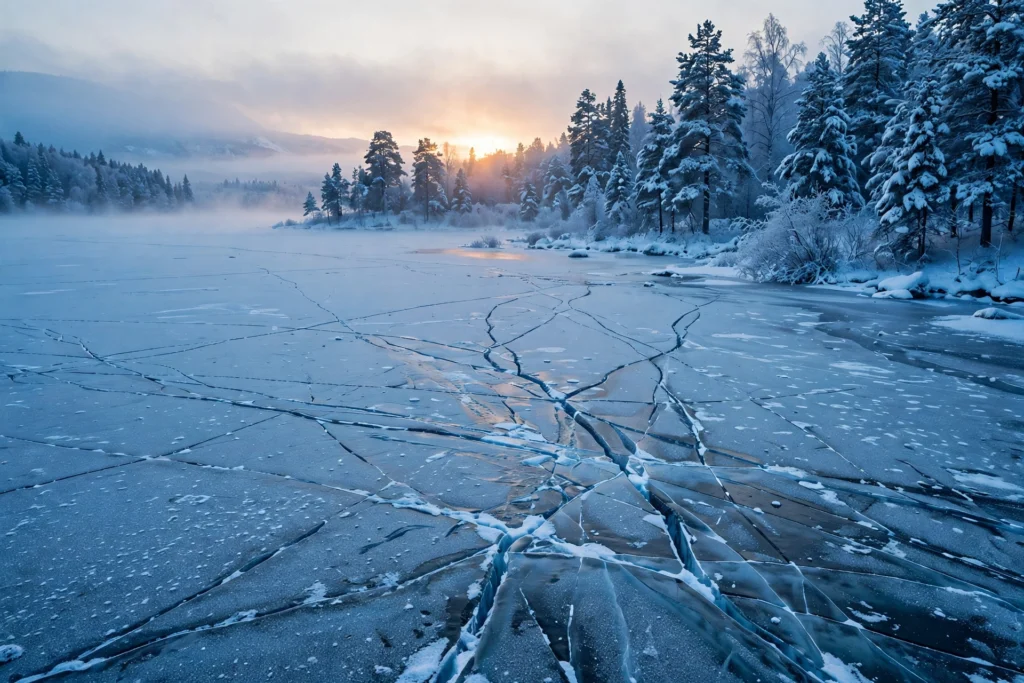
Frozen has several common uses:
| Meaning | Example |
| Turned into ice | The lake is frozen. |
| Preserved at low temperatures | We bought frozen vegetables. |
| Unable to move | He stood frozen with fear. |
| Computer not responding | My screen is frozen. |
| Money or assets restricted | The company’s assets were frozen. |
The word can describe physical conditions as well as figurative situations.
When to Use Frozen Instead of Froze
Use frozen when the sentence requires a past participle or when you want to describe a condition.
There are three particularly important situations.
1. Frozen With Has, Have, and Had
Perfect tenses require a helping verb followed by the past participle.
The correct structures are:
- Has + frozen
- Have + frozen
- Had + frozen
Examples:
- She has frozen the leftover food.
- I have frozen the water bottles.
- They had frozen the meat before the trip.
- The pipes have frozen again.
- The lake had frozen before the snowstorm arrived.
The helping verb changes according to the subject and tense, but frozen remains the same.
The same has/have agreement logic applies in Anyone Has or Anyone Have.
The British Council explains that perfect verb phrases use have with a past participle.
2. Frozen in Passive Voice
Use frozen after a form of the verb be when constructing a passive sentence.
Examples:
- The food was frozen before delivery.
- The pipes were frozen by the extremely cold weather.
- The samples are frozen for laboratory testing.
- The vegetables have been frozen for storage.
In passive constructions, the object receiving the action becomes the focus of the sentence.
The general structure is:
Subject + form of be + past participle
For example:
Active: The manufacturer froze the food.
Passive: The food was frozen by the manufacturer.
The form of be changes according to the tense, while frozen remains the past participle.
3. Frozen as an Adjective
Frozen can also work as an adjective. In this case, it describes the condition or state of a person, place, or object.
Examples:
- Frozen pizza is easy to prepare.
- The frozen lake attracts winter visitors.
- She placed the frozen berries in a bowl.
- He touched the frozen window.
- We need to replace the frozen water pipe.
Notice that frozen describes a noun rather than functioning as a simple past-tense verb.
Has Froze or Has Frozen: Which Is Correct?
Has frozen is correct in standard English. The word has must be followed by the past participle of the verb, which is frozen, not its simple past form, froze.
Compare these examples:
| Incorrect | Correct |
| The water has froze. | The water has frozen. |
| She has froze the chicken. | She has frozen the chicken. |
| My computer has froze. | My computer has frozen. |
| The pipes have froze. | The pipes have frozen. |
| He has froze the food. | He has frozen the food. |
Why is has frozen correct?
English uses the present perfect tense to connect a past action with the present.
Its structure is:
Subject + has/have + past participle
For example:
- The water has frozen.
- The refrigerator has stopped working.
- The pipes have frozen because of the cold.
The same rule applies when using had:
- Correct: The water had frozen before sunrise.
- Incorrect: The water had froze before sunrise.
Was Froze or Was Frozen: Which Is Correct?
Was frozen is the correct standard form. When using the passive voice or describing a condition with was, use frozen rather than froze.
Examples:
- Correct: The chicken was frozen before delivery.
- Incorrect: The chicken was froze before delivery.
- Correct: The lake was frozen when we arrived.
- Incorrect: The lake was froze when we arrived.
There is an important distinction between these two sentences:
The lake froze last night.
This describes an action that happened in the past.
The lake was frozen last night.
This describes the lake’s condition at that time or can describe a passive action, depending on the context.
Both are grammatically correct, but they communicate slightly different things.
Remember:
- Froze = Simple past action.
- Was frozen = Past state or passive construction.
For more was/were choices, see Was There or Were There and If He Was vs If He Were.
Frozen vs Freezing: What Is the Difference?
Frozen and freezing both describe conditions associated with cold temperatures, but they have different grammatical functions and meanings.
Frozen describes a completed result or existing condition, while freezing can describe an ongoing process or extremely cold weather.
| Word | Meaning | Example |
| Frozen | Already turned into ice or in a frozen condition | The lake is frozen. |
| Freezing | Currently becoming ice | The water is freezing. |
| Freezing | Extremely cold | It is freezing outside. |
Examples of Frozen
- The frozen water is difficult to break.
- I bought frozen vegetables.
- The frozen lake is covered with snow.
- My phone screen is frozen.
Examples of Freezing
- The water is freezing in the container.
- It is freezing outside today.
- The temperature is freezing the pipes.
- We are freezing because the heater is broken.
Easy trick: Use freezing when emphasizing an ongoing process or extreme cold. Use frozen when describing something that has already reached a frozen condition.
Freezed vs Frozen: Is Freezed Correct?
Freezed is not the standard past-tense or past-participle form of freeze in standard English.
The correct verb forms are:
- Present: Freeze
- Simple past: Froze
- Past participle: Frozen
For example:
| Incorrect | Correct |
| The water freezed overnight. | The water froze overnight. |
| I have freezed the food. | I have frozen the food. |
| The pipes were freezed. | The pipes were frozen. |
| She freezed the vegetables. | She froze the vegetables. |
Most regular English verbs form their past tense by adding -ed. However, freeze is an irregular verb, so its forms change differently.
For formal writing, academic work, and professional communication, always use freeze, froze, and frozen.
Freeze, Froze, Frozen: Complete Verb Forms
Understanding all the forms of freeze makes it easier to choose the correct word.
Here is a complete conjugation table:
| Verb Form | Correct Word | Example |
| Base form | Freeze | I freeze leftover food. |
| Third-person singular | Freezes | Water freezes in extreme cold. |
| Simple past | Froze | The water froze yesterday. |
| Past participle | Frozen | The water has frozen. |
| Present participle | Freezing | The water is freezing. |
Examples Using Different Tenses
Present Simple
I freeze fresh fruit to preserve it.
Present Continuous
The water is freezing in the container.
Simple Past
The lake froze last night.
Present Perfect
The lake has frozen.
Past Perfect
The lake had frozen before we arrived.
Future
The water will freeze overnight.
Future Perfect
The water will have frozen by tomorrow morning.
Notice how the verb changes depending on the tense and sentence structure.
Froze vs Frozen Examples in Sentences
The following examples show how to use both words correctly in everyday English.
| Sentence | Correct Word | Explanation |
| The river ___ overnight. | Froze | Simple past |
| The river has ___. | Frozen | Present perfect |
| The food was ___ before shipping. | Frozen | Passive construction |
| She ___ the leftovers yesterday. | Froze | Simple past |
| The vegetables are ___. | Frozen | Adjective |
| The computer has ___. | Frozen | Present perfect |
| He ___ when he saw the accident. | Froze | Past action |
| The pipes had ___. | Frozen | Past perfect |
| The lake is ___. | Frozen | Describes a condition |
| The water is ___. | Freezing | Ongoing process |
More Examples of Froze in a Sentence
- My hands froze when I went outside.
- The lake froze after several cold nights.
- She froze the leftover chicken.
- The computer froze during the meeting.
- He froze in the middle of his speech.
- The company froze hiring during the financial downturn.
- The bank froze the account after detecting suspicious activity.
More Examples of Frozen in a Sentence
- The frozen lake looks beautiful.
- I have frozen the remaining food.
- The meat was frozen before transportation.
- Her feet were frozen after walking in the snow.
- The computer screen is frozen.
- The company has frozen employee salaries.
- The frozen vegetables are ready to cook.
Other Irregular Verbs Like Freeze, Froze, Frozen
Freeze belongs to a group of English irregular verbs that change their internal vowel sounds rather than simply adding -ed.
Learning these verbs together can help you recognize common irregular verb patterns.
| Base Form | Simple Past | Past Participle |
| Freeze | Froze | Frozen |
| Speak | Spoke | Spoken |
| Break | Broke | Broken |
| Choose | Chose | Chosen |
| Steal | Stole | Stolen |
| Wake | Woke | Woken |
| Weave | Wove | Woven |
| Drive | Drove | Driven |
| Write | Wrote | Written |
These verbs do not all follow an identical pattern, but several share vowel changes and past participles ending in -en.
For example:
- I speak English.
- I spoke English yesterday.
- I have spoken English for years.
Similarly:
- The glass breaks easily.
- The glass broke yesterday.
- The glass has broken.
Feel follows a similar irregular pattern — see Felt vs Feel.
Learning the three principal forms together is an effective way to remember irregular verbs.
Common Mistakes When Using Froze and Frozen
Even experienced English speakers sometimes confuse irregular verb forms. Here are some common mistakes and their corrections.
| Common Mistake | Correct Version | Reason |
| The water freezed. | The water froze. | Incorrect irregular verb form |
| I have froze the food. | I have frozen the food. | Past participle required |
| The lake has froze. | The lake has frozen. | Present perfect construction |
| The pipes were froze. | The pipes were frozen. | Past participle required |
| The food frozen yesterday. | The food froze yesterday. | Simple past required |
| Did the water froze? | Did the water freeze? | Base form follows did |
| She didn’t froze the meat. | She didn’t freeze the meat. | Base form follows did |
| The screen is froze. | The screen is frozen. | Correct adjective form |
Remember the Rule After Did
One additional rule deserves attention.
When using did or didn’t in a past-tense question or negative sentence, the main verb returns to its base form.
Correct:
- Did the lake freeze?
- Did you freeze the vegetables?
- The water didn’t freeze.
- She didn’t freeze the chicken.
Incorrect:
- Did the lake froze?
- Did you froze the vegetables?
- The water didn’t froze.
This happens because did already carries the past-tense meaning. Adding another past-tense form to the main verb is unnecessary.
For a similar base-form rule, see What Happen or What Happened.
Frequently Asked Questions About Froze vs Frozen
1. What is the past tense of freeze?
The simple past tense of freeze is froze. Use it when describing an action that happened in the past. For example, “The water froze overnight.” The past participle is frozen, which is used in perfect tenses and passive constructions.
2. When should I use froze instead of frozen?
Use froze when describing a completed past action without a perfect-tense auxiliary. For example, “The lake froze last night.” Use frozen when the sentence requires a past participle, such as “The lake has frozen,” or when describing a condition, such as “The lake is frozen.”
3. Is it has froze or has frozen?
Has frozen is correct in standard English. The present perfect tense requires has or have followed by the past participle. Since frozen is the past participle of freeze, you should write “The water has frozen,” not “The water has froze.”
4. Is it was froze or was frozen?
Was frozen is correct in standard English. It uses the past participle frozen after was to describe a condition or form a passive construction. For example, “The chicken was frozen before delivery.” Was froze is not the standard grammatical form.
5. Can frozen be used as an adjective?
Yes, frozen can function as an adjective to describe something that has become solid because of cold temperatures or has been kept at a low temperature. Examples include frozen food, frozen vegetables, and a frozen lake. It can also describe a person standing motionless because of fear.
6. What is the past participle of freeze?
The past participle of freeze is frozen. It is used with helping verbs such as has, have, and had. Examples include “I have frozen the food,” “She has frozen the water,” and “The pipes had frozen before the plumber arrived.”
7. Is freezed a correct word?
Freezed is not the standard form of the verb freeze. The correct simple past is froze, and the correct past participle is frozen. Use “The water froze yesterday” and “The water has frozen” in standard written English.
8. Why do people confuse froze and frozen?
People confuse these words because they are different forms of the same irregular verb. English learners may also expect freeze to follow the regular -ed pattern. Remembering the three forms — freeze, froze, and frozen — makes it easier to identify the correct form in different sentence structures.
9. What is the difference between frozen and freezing?
Frozen describes something that has already reached a frozen condition, while freezing can describe an ongoing process or extremely cold weather. For example, “The water is frozen” describes its current condition, while “The water is freezing” describes the process of turning into ice.
10. Can I use frozen alone as the past tense of freeze?
No. Frozen cannot replace froze as the simple past-tense verb in a standard sentence. For example, “The pond froze yesterday” is correct, while “The pond frozen yesterday” is incomplete. However, frozen can appear independently in an adjective phrase, such as “the frozen pond.”
11. What verbs follow the same pattern as freeze, froze, frozen?
Several irregular English verbs have similar vowel changes and past participles ending in -en. Examples include speak, spoke, spoken; break, broke, broken; choose, chose, chosen; and steal, stole, stolen. Learning these forms together can make irregular verb patterns easier to recognize.
Final Thoughts
Understanding froze vs frozen becomes much easier when you remember the grammatical role of each word.
Use froze for a completed action in the simple past, such as “The lake froze overnight.” Use frozen after has, have, or had, in passive constructions, or as an adjective describing a condition.
The easiest way to remember the difference is to memorize the three forms together:
- Freeze – Present or base form.
- Froze – Simple past tense.
- Frozen – Past participle and adjective.
Once you understand this pattern, you can avoid common mistakes such as “has froze,” “was froze,” and “freezed.” Apply these rules consistently, and choosing between froze and frozen will become much easier in everyday conversations and professional writing.