If He Was vs If He Were: Rules, Examples & Correct Usage
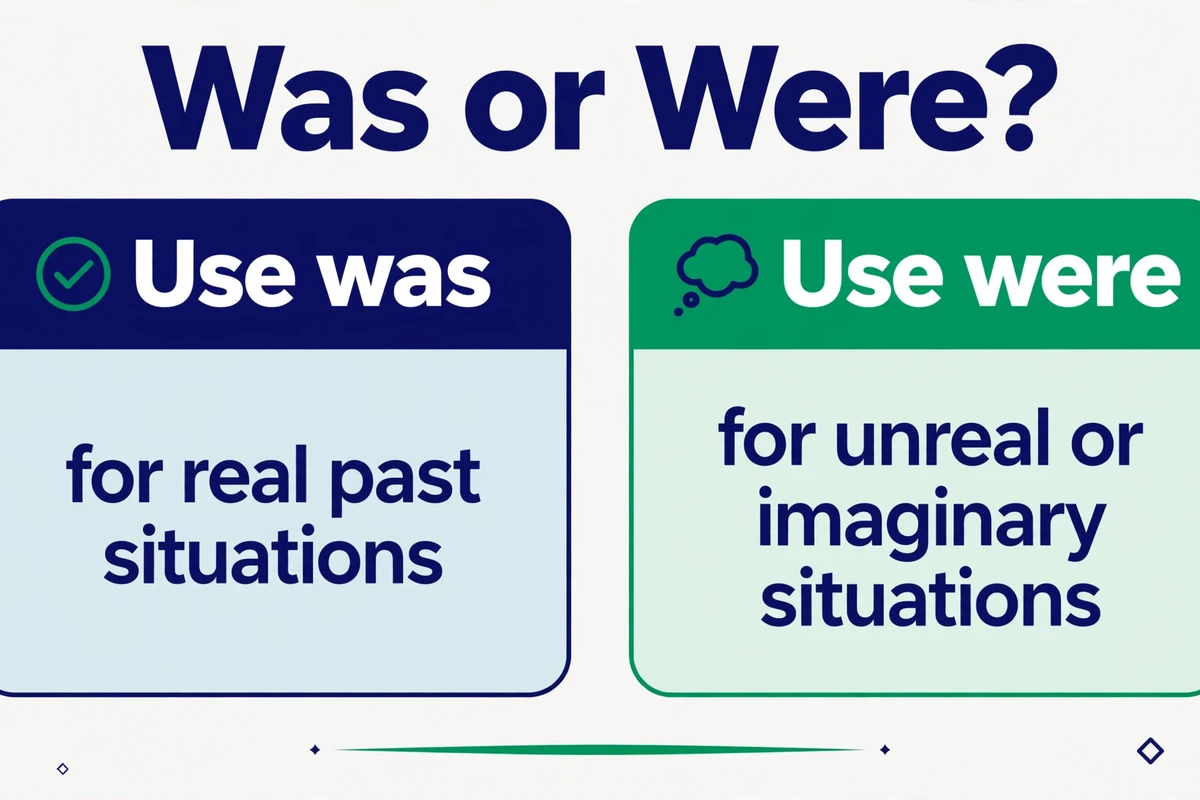
Should you say “if he was” or “if he were”? Both forms exist in English, and choosing the wrong one is one of the most common grammar mistakes learners make. The short answer: use “if he was” when talking about something that might really have happened, and “if he were” when imagining something unreal or hypothetical. In this guide, you will learn the subjunctive mood rule behind the difference, see 20 real sentence examples, test yourself with practice exercises, and get answers to the most asked questions about “was” vs “were” in “if” clauses.
Quick Answer
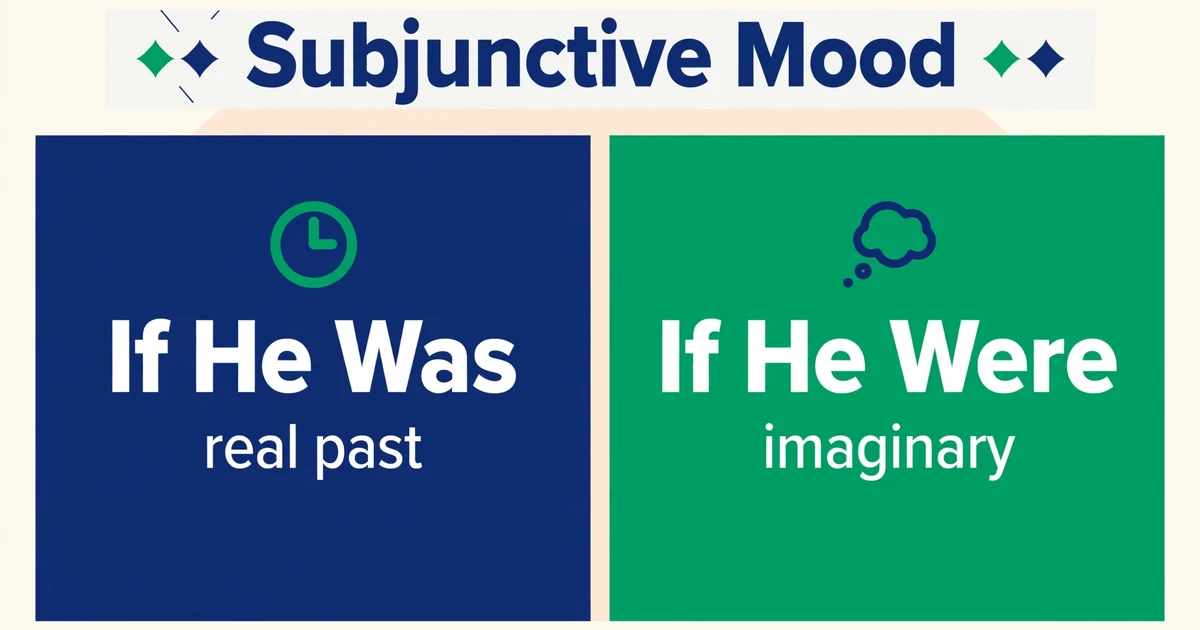
“If he was” is correct for real or uncertain past situations (indicative mood): If he was at the meeting, I didn’t see him. “If he were” is correct for hypothetical, imaginary, or wishful situations (subjunctive mood): If he were at the meeting, he would have spoken up. In formal writing, always use “were” for unreal conditions — even with singular subjects like “he,” “she,” or “I.”
What Is the Subjunctive Mood?
English verbs have moods, and the two that matter here are the indicative and the subjunctive.
The indicative mood states facts or things the speaker believes could be true: He was late. She is tired. It follows normal subject-verb agreement, so singular subjects take “was.”
The subjunctive mood expresses wishes, hypotheticals, and conditions contrary to fact — things that are imagined rather than real. In the past subjunctive, the verb “be” becomes “were” for every subject, singular or plural: If I were, if he were, if she were, if it were. As Cambridge Grammar explains, this “were” form signals unreality rather than past time. Cambridge Dictionary’s entry for “be” lists this “possible condition” use explicitly, with examples like “If I were afraid of you, why would I be here?”
So the choice is never random. It depends on one question: is the situation real (or possibly real), or is it imagined?
Comparison Table: If He Was vs If He Were
| Feature | If He Was | If He Were |
|---|---|---|
| Grammar mood | Indicative | Subjunctive |
| Situation type | Real or possibly real | Hypothetical or unreal |
| Time reference | Past (something that may have happened) | Present or future (imagined) |
| Typical result clause | Past tense (“he didn’t answer”) | “Would” or “could” (“he would help”) |
| Register | Neutral, all contexts | Preferred in formal writing |
| Example | If he was late, he missed the bus. | If he were late, he would miss the bus. |
When to Use “If He Was” (With Examples)
Use “if he was” when you are uncertain about something that could really have happened. The speaker does not know the fact and is considering a real possibility.
- If he was at the meeting, I didn’t see him.
- She asked if he was feeling better.
- If he was late, he missed the bus.
- I wonder if he was the one who called.
- If he was tired, he didn’t show it.
- The teacher wanted to know if he was finished.
- If he was born in 1990, he is 36 now.
- Call me if he was the last to leave.
Notice that in each case, the event is a genuine open question about the past — not an imagined scenario. This “was vs were” logic also applies to similar choices, like the one covered in our guide to was there or were there.
When to Use “If He Were” (With Examples)
Use “if he were” for hypothetical, counterfactual, or wishful situations — things that are not true, are unlikely, or are purely imagined. This is the past subjunctive, and it also appears after “wish” and “as if / as though.”
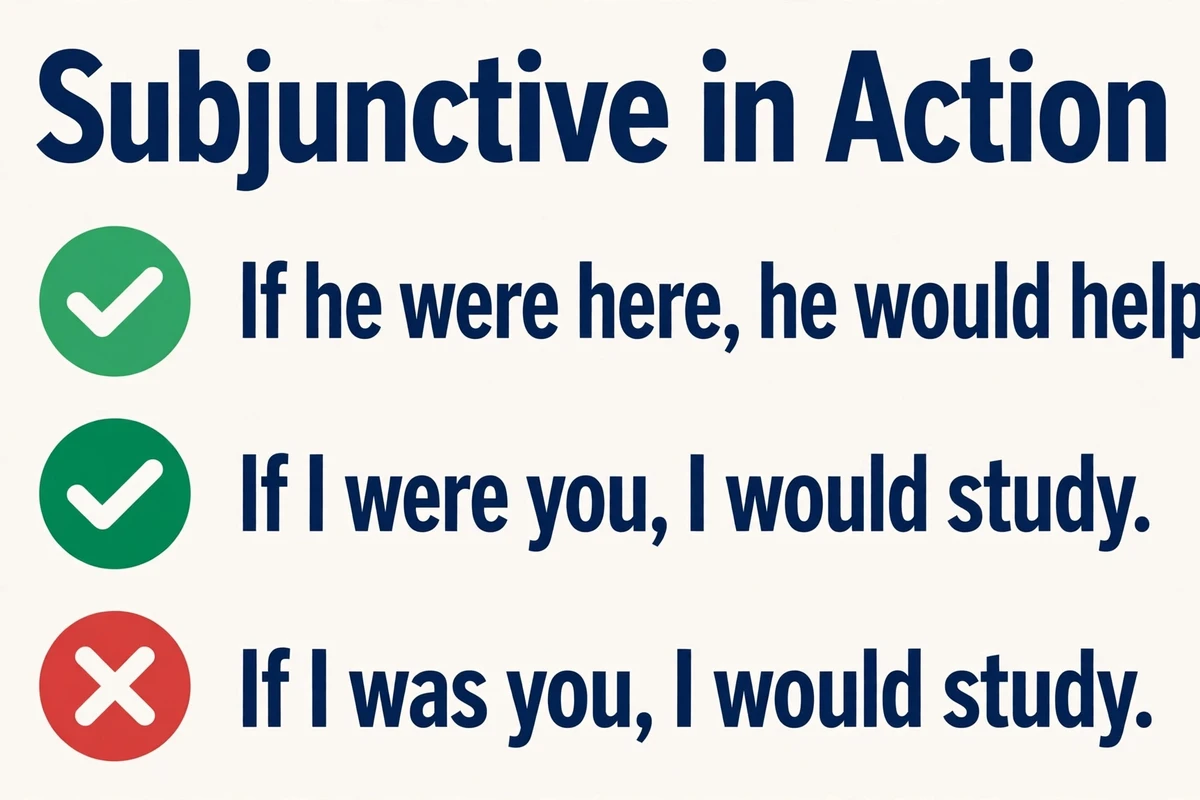
- If he were here, he would help us.
- If he were taller, he could reach the shelf.
- I wish he were more patient.
- If he were the manager, things would change.
- She acts as if he were still in charge.
- If he were rich, he would travel the world.
- I wish he were coming with us.
- If it were not for his help, we would have failed.
- If she were honest, she would admit it.
- He wishes he were younger.
- If I were you, I would apologize.
- If there were more time, we could finish.
The “wish” construction follows the same rule: I wish he were here imagines a different reality. For more on wish-related phrasing, see wish you vs wishing you.
Incorrect vs Correct: Common Mistakes
Incorrect: If he was you, he would understand.
Correct: If he were you, he would understand.
Why: Being “you” is impossible for him — a counterfactual condition, so the subjunctive “were” is required.
Incorrect (formal contexts): I wish he was here.
Correct: I wish he were here.
Why: A wish imagines an unreal situation. Note: “I wish he was here” is extremely common in casual speech and is widely accepted informally — but formal writing still prefers “were.”
Correct (do not “fix”): If he was at home, he didn’t answer the phone.
Why: This expresses genuine uncertainty about a real past event. Changing it to “were” would be wrong here.
Incorrect: If he was taller, he would play basketball.
Correct: If he were taller, he would play basketball.
Why: His height is a fixed fact; the sentence imagines the opposite, so it needs the subjunctive.
Correct (do not “fix”): She asked if he was ready.
Why: Reported speech about a real state — indicative “was” is correct.
Rules and Exceptions
The “would” test. If the result clause contains “would” or “could” describing an imagined outcome, the “if” clause almost always needs “were”: If he were careful, he wouldn’t make mistakes.
“As if” and “as though.” These introductions usually take the subjunctive when the comparison is unreal: He talks as if he were the boss (he isn’t). If the comparison might be true, “was” is fine: He looks as if he was crying (he may actually have been).
“Wish” always takes “were.” Wishes are unreal by definition: I wish he were here. She wishes it were Friday.
Informal speech is shifting. In everyday conversation, many native speakers say “if he was” even for hypotheticals (“If he was here, he’d help”). This is normal colloquial English, not a sign of poor education — but in essays, exams, business writing, and published work, “were” remains the standard. Match your choice to the register.
American vs British English. Both varieties prefer “were” in formal subjunctive contexts. British English tolerates indicative “was” in hypotheticals slightly more often in casual use, but the formal rule is the same on both sides of the Atlantic.
Getting subject-verb agreement right in general strengthens all of this — our guides to anyone has or anyone have, people do or people does, and that’s mean vs that means cover the most confused cases.
Real-World Usage
Work email (formal): “If he were available, we would schedule the client call for Thursday.” — hypothetical, so “were.”
Talking with a friend (informal): “If he was at the party, I totally missed him.” — real uncertainty about the past, so “was.”
Job interview: “If I were hired, I would start by reviewing the current workflow.” — imagining an unreal present, so “were.”
Checking facts: “Do you know if he was the project lead last year?” — asking about a real past fact, so “was.”
Easy Memory Technique
Remember the three W’s: wishes, would, and what-ifs take “were.” If your sentence contains a wish (I wish he were), a “would” result (he would help), or a what-if scenario (what if he were), choose “were.” Everything else — real doubts about the past — takes “was.” As Grammarly’s conditional guide puts it, real conditionals pair with “will” while unreal conditionals pair with “would” or “could” — and unreal “be” is always “were.”
Practice Exercises
Choose “was” or “were” for each sentence.
- If he ___ taller, he could reach the top shelf.
- I didn’t know if he ___ at home yesterday.
- She wishes he ___ more careful with deadlines.
- If he ___ the manager, he would hire more staff.
- They asked if he ___ feeling better this morning.
- He talks as if he ___ the owner of the company.
- If I ___ you, I would apologize immediately.
Answer Key
- were — hypothetical (his height can’t change); “could” signals unreality.
- was — real past uncertainty; the speaker genuinely doesn’t know.
- were — “wish” always takes the subjunctive.
- were — counterfactual condition paired with “would.”
- was — reported speech about a real state.
- were — “as if” + unreal comparison (he isn’t the owner).
- were — fixed subjunctive phrase “if I were you.”
Frequently Asked Questions
Which is correct: “he was” or “he were”?
Both are correct in different contexts. Use “he was” for real past statements (He was late) and “he were” only in hypothetical or wishful constructions (If he were late, he would miss it; I wish he were here). “He were” never appears outside the subjunctive.
Is it correct to say “if he were”?
Yes — for hypothetical situations. “If he were here, he would help” is the standard formal construction. It is the past subjunctive, which uses “were” for all subjects.
Which is correct: “if I were” or “if I was”?
The same rule applies. Use “if I were” for imagined situations (If I were rich…) and “if I was” for real past uncertainty (If I was rude, I apologize — here the speaker genuinely isn’t sure).
Is “if I were you” grammatically correct?
Yes. It is a fixed subjunctive phrase used to give advice. Because you can never literally be the other person, the condition is always counterfactual, so “were” is required in formal English.
Which is correct: “as if he was” or “as if he were”?
Use “as if he were” when the comparison is unreal (He acts as if he were the boss). “As if he was” is acceptable when the situation might be real (He looks as if he was crying) and is also common in informal speech generally.
Do native speakers always say “if he were”?
No. In casual conversation, most native speakers say “if he was” even for hypotheticals. The “were” form survives mainly in formal writing, exams, and fixed phrases like “if I were you.” Knowing both — and when each fits — is the real skill.
Conclusion
“If he was” looks back at a past that might really have happened; “if he were” imagines a present that isn’t real. Keep the three W’s in mind — wishes, would, and what-ifs take “were” — and you will choose correctly every time. In formal writing, protect the subjunctive; in casual speech, don’t be surprised to hear “was” doing its job. Master this distinction and a whole family of related “was vs were” choices becomes automatic.